

Why One Stable Visual Center Can Make Everyday Outfits Feel More Polished Without Extra Effort
What a stable visual center actually means
A stable visual center is the point in an outfit where the eye naturally finds balance. This is often somewhere around the middle of the body, where the top, lower half, and any visible shaping details begin working together clearly. It may come from a clean tuck, a helpful waistband, a neat belt line, a balanced layer opening, or another visual cue that gives the outfit a reliable center of gravity.
This matters because the eye usually wants one place to organize the whole look from. If the outfit does not provide that point, the pieces may still be attractive, but the overall impression can feel less controlled than it should.
Why everyday outfits often weaken without one
Daily dressing usually depends on simple clothing. Since there are fewer dramatic elements competing for attention, the structural details become more visible. If the middle of the outfit feels blurred, too loose, or visually uncertain, the look may start feeling random even when the separate garments are all useful. A stable center often solves that problem by helping the top and bottom relate more naturally.
Stylists often explain that polish comes from how pieces connect, not only from the quality of the pieces themselves. A strong visual center is one of the clearest examples of that idea in real life.

How the middle of the outfit shapes the whole look
The center of an outfit often determines how the rest of the silhouette is read. If the top falls too heavily over the lower half, the outfit may feel shapeless. If the break between upper and lower clothing is awkward, the proportions may seem slightly off even when nothing is obviously wrong. Once the middle becomes clearer, the eye usually understands the full look much more easily.
This is why so many outfits improve after one small change at the center. The clothing may not need more detail. It may simply need one place where the visual structure becomes easier to read.
Why this matters more than adding more accessories
Readers often try to fix weak outfits by adding another accessory, stronger shoes, or one more interesting detail. Sometimes that helps, but often the outfit still feels unclear because the real problem sits in the middle. If the clothing has no stable visual center, added details may only create more noise. A clearer center usually does more for polish than several extra finishing touches combined.
This is one reason some simple outfits look more expensive than busier ones. They do not rely on extra decoration to feel complete. They rely on stronger internal balance.
How waist definition often creates the center most easily
One of the most common ways to create a stable visual center is through gentle waist definition. This may come from a tuck, a belt, a cleaner top length, or a dress seam that gives the outfit a clearer middle point. The goal is not tightness. It is clarity. Once the center of the outfit is easier to see, the rest of the clothing often begins looking more intentional automatically.
This works especially well in wardrobes built around simple tops, straight trousers, calm skirts, and easy dresses. Those pieces often already have enough value. They simply need the outfit’s center to support them more clearly.
Why open layers can help create it too
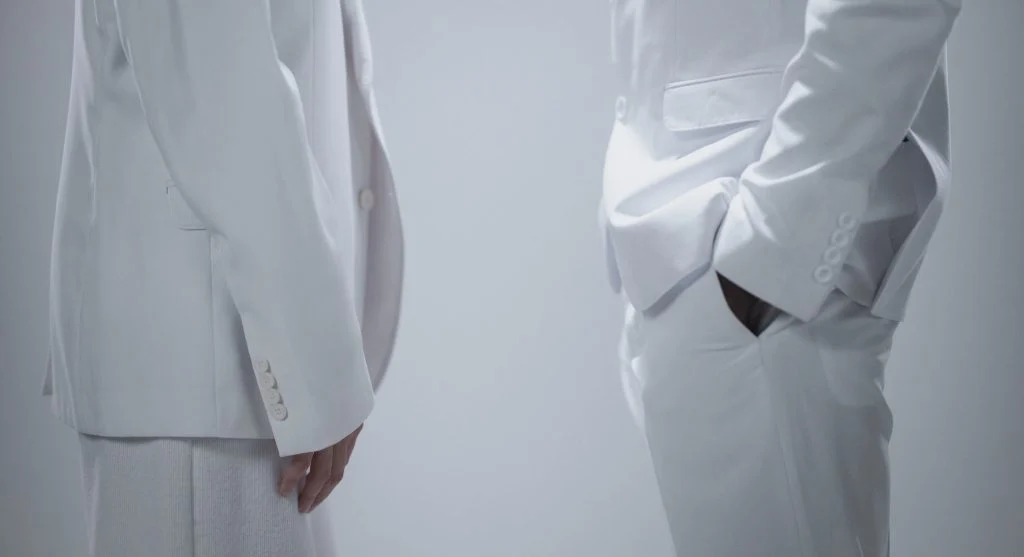
Not every stable visual center comes from a waistband or belt. Open layers can also do this job. A cardigan, soft blazer, overshirt, or light jacket may frame the center of the outfit and guide the eye toward a calmer middle line. When the layer opening aligns well with the top and bottom underneath, it often strengthens the whole look without needing anything else added.
This is why layers often improve simple outfits so quickly. They are not only adding another garment. They are often creating the visual structure the outfit was missing.
How shoes and hems support the center
A stable middle does not work alone. The lower half still needs to support it. Shoes and hems help determine whether the outfit’s center feels grounded or disconnected. If the hem is awkward or the shoe shape pulls the eye too hard away from the middle, the outfit can lose some of its balance again. But when the lower half supports the center naturally, the whole look often feels much calmer.
This is one reason consistent shoes and cleaner hem lengths often improve simple wardrobes. They help protect the central balance the outfit is trying to build.
Why this makes outfits easier to repeat
Readers usually repeat outfits more easily when they understand why those outfits work. A stable visual center often becomes part of that explanation. Once readers know the middle of the look needs a clear point of balance, they can recreate that effect with different tops, trousers, skirts, or layers. The wardrobe begins feeling more dependable because the styling logic is easier to repeat.
That kind of consistency helps daily dressing feel less random. Instead of hoping the clothing works, the reader begins building from one principle the outfit already responds to well.
How to tell when the center is missing
One sign is that the outfit feels slightly shapeless or visually loose through the middle. Another is that the look improves immediately after one small waist-area or layer adjustment. Readers may also notice that individual pieces seem good, but the outfit never fully settles as one whole look. These are often clues that the clothing needs a stronger visual center more than it needs more fashion detail.
In those moments, the answer is usually not complexity. It is clearer structure where the outfit needs it most.
Why this often looks more polished than stronger trend details
Outfits with a stable visual center tend to look more polished because they seem more organized from the inside out. The eye understands them quickly. Nothing feels as though it was added just to create interest or cover uncertainty. That kind of balance often reads as more elevated, even when the clothing is simple and practical.
For many readers, this is one of the most useful style lessons. Strong outfits do not always need more statement. Very often, they only need one clearer place for the whole look to settle around.
Frequently Asked Questions
Q: What is a stable visual center in an outfit?
A: It is the point in an outfit where the eye naturally finds balance, usually around the middle of the silhouette where the top, bottom, and shaping details work together clearly.
Q: Why does a stable visual center make outfits look more polished?
A: It makes outfits look more polished because it gives the clothing a stronger sense of organization and helps the eye understand the full silhouette more easily.
Q: Does creating a visual center always require a belt?
A: No. A visual center can come from a belt, but it can also come from a tuck, top length, seam placement, or an open layer that frames the middle of the outfit well.
Q: How can I tell if my outfit needs a stronger center?
A: If the middle of the outfit feels blurry, shapeless, or unresolved, and one small adjustment around the waist or layer opening improves the whole look, the center likely needed more clarity.
Key Takeaway
One stable visual center can make everyday outfits feel more polished without extra effort because it gives the whole look a clear place to organize itself around. When the middle of the outfit feels more balanced, the clothing usually looks more intentional, more connected, and much easier to trust. For many readers, stronger daily style begins not with more fashion pieces, but with one clearer point of visual balance.

Related Posts

Why One Steady Base Layer Shape Can Make Everyday Outfits Feel Easier to Build and More Polished

Why One Calm Outfit Anchor Can Make Everyday Looks Feel More Steady From First Piece to Last