Why Outfit Repetition Often Makes Everyday Style Feel More Consistent and Less Stressful
Outfit repetition often gets treated like a problem, but in everyday life it usually works more like a strength. Many readers feel pressure to create a different look every day, even when the clothes that work best are already clear. This can make daily dressing feel more difficult than it needs to be. In most wardrobes, the pieces that repeat naturally are often the ones doing the most useful work.
Stylists, wardrobe planners, and fashion editors often explain that repeated outfits do not weaken personal style. They often make it easier to maintain. When a reader knows which shapes, shoes, layers, and colors usually work, daily dressing becomes more consistent and much less stressful. That is why outfit repetition often supports everyday style instead of limiting it.
Why outfit repetition often feels easier in real life
Daily life does not always leave much room for outfit experimentation. Workdays begin quickly, schedules shift, weather changes, and attention is often divided. On those kinds of days, clothing that has already proven itself useful becomes much more valuable than something uncertain or overly specific. Repetition helps because it lowers the number of choices readers have to solve before leaving home.
Wardrobe experts often note that repeated outfits usually happen because the pieces involved already fit real routines. They support comfort, movement, and visual balance. That is one reason repeatable outfits often survive much longer in a wardrobe than more dramatic combinations.
How outfit repetition reduces morning stress
One of the clearest benefits of outfit repetition is that it removes some of the mental effort from getting dressed. A reader may already know that one pair of trousers works with a knit, a shirt, and a blazer. The same may be true for one dependable dress or one pair of loafers. Once that knowledge is in place, the outfit no longer needs to be rebuilt from zero every morning.
Time-management experts often explain that repeated decisions create quiet stress. Repetition can reduce that stress because the outfit formula is already trusted. This often makes daily dressing feel steadier even on more demanding days.
Why repeated pieces often reveal the best part of a wardrobe
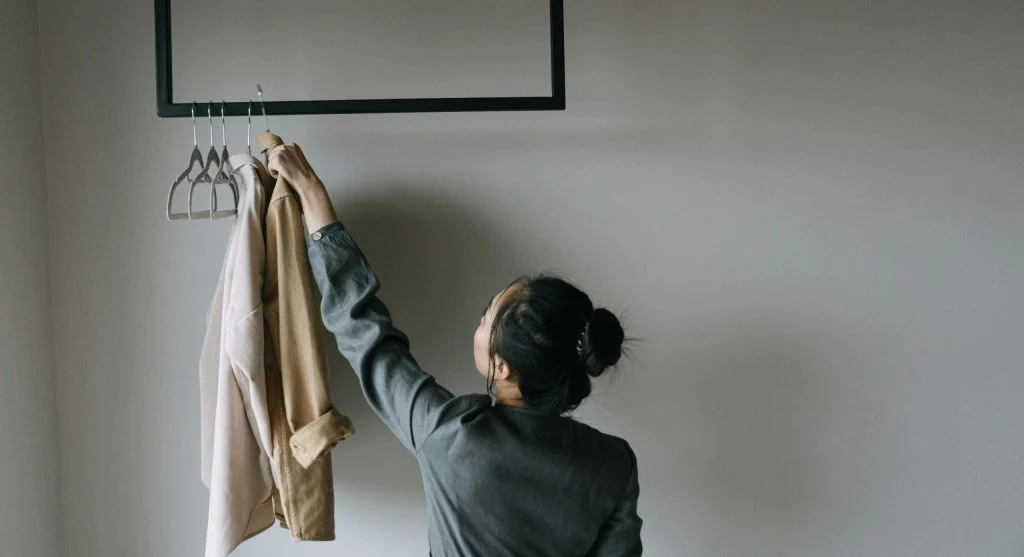
The pieces readers repeat most often are usually not random. They tend to fit well, feel comfortable, and connect naturally with several other items. A plain shirt, useful knit, straight trousers, simple denim, or dependable shoe may not seem dramatic, but repeated wear often shows that these are the real foundation of the closet.
Closet planners often recommend paying close attention to what returns from the laundry most often. Those patterns usually reveal which pieces are doing the most important work and which ones are only taking up visual space.
How repeatable outfit formulas keep style consistent
Outfit repetition often works best through formulas rather than exact copies. A formula might be shirt plus trousers plus loafers, knit plus denim plus sneakers, or dress plus light jacket plus flats. These combinations can repeat across several days with small changes in color, layers, or accessories while still keeping the same reliable structure.
Stylists often explain that consistency in everyday style usually comes from repeated outfit shapes more than repeated exact clothing. The formula gives the outfit direction, while smaller details keep it feeling fresh enough to wear again.
Why repeated outfits do not remove personal style
Some readers worry that outfit repetition will make their clothing feel boring or too predictable. In practice, repetition often makes personal style easier to see. Once the core outfit structure is clear, smaller choices such as shoe finish, color accents, jewelry, or outerwear become more noticeable in a good way. The reader’s style identity often becomes easier to recognize when the base remains steady.
Wardrobe consultants often note that personal style is often built through repeated choices. The pieces readers keep returning to usually say more about their real style than one-time experiments do.
How color connection helps outfit repetition feel fresh
Repeatable outfits usually feel more natural when the wardrobe uses connected colors. Shades such as black, navy, gray, beige, olive, white, and denim blue often make it easier for repeated pieces to move across different combinations without looking too similar in a negative way. A trouser may stay the same while the knit changes. The loafers may repeat while the jacket shifts.
Wardrobe experts often explain that color consistency creates freedom. It lets readers repeat their best pieces more often without making the wardrobe feel visually stuck.
Why shoes matter so much in repeated outfits
Shoes often help repeated outfits feel complete without forcing the whole wardrobe to change. A dependable loafer, clean sneaker, flat, or low boot can carry several outfits because it supports different clothing combinations without shifting the style too sharply. When the shoes repeat well, the whole outfit usually feels easier to trust.
Footwear specialists often point out that one or two highly useful pairs often shape daily style more than a larger number of shoes that only work in narrow ways. This makes repeated outfits much simpler to build throughout the week.
How outfit repetition can improve shopping decisions
Once readers understand which outfit formulas and pieces repeat best, shopping often becomes clearer. Instead of buying clothing that only looks interesting on its own, they begin to notice what would actually support the repeated outfits already working in the closet. A better layer, more dependable shoe, or stronger basic may become more useful than something entirely new and unrelated.
Retail behavior specialists often note that wardrobe clarity usually improves shopping quality. Readers make smarter choices when they know which pieces already carry most of their daily style.
Why forcing too much variety can create more stress
Trying too hard to avoid repetition can make everyday style less consistent. Readers may choose items that feel less comfortable, harder to combine, or less suited to the day simply to avoid wearing something familiar. This can weaken outfit quality and increase morning uncertainty.
Fashion editors often explain that better variety usually comes from small changes inside trusted formulas rather than abandoning what already works. A different outer layer, softer accent color, or changed shoe may be enough to create freshness without breaking the structure of the wardrobe.
Frequently Asked Questions
Q: What is outfit repetition in everyday style?
A: Outfit repetition means returning to the same strong pieces or outfit formulas regularly because they work well in daily life. It often makes dressing faster and more dependable.
Q: Does outfit repetition make style look boring?
A: No. Outfit repetition often makes style look more consistent and more intentional. Small changes in layers, colors, or accessories usually keep repeated outfits feeling fresh enough.
Q: Why do repeated outfits feel less stressful?
A: Repeated outfits often feel less stressful because readers already trust the fit, balance, and usefulness of the pieces involved. This lowers decision fatigue on busy mornings.
Q: How can repeated outfits still feel new?
A: Repeated outfits can still feel new when the reader changes a jacket, shoe, bag, or color accent while keeping the main outfit formula the same.
Key Takeaway
Outfit repetition often makes everyday style feel more consistent and less stressful because it builds around pieces and formulas that already work well in real life. Repeated clothing is often a sign that the wardrobe is useful, not limited. For many readers, daily dressing becomes easier when trusted outfits are repeated with confidence instead of avoided for the sake of variety alone.

Related Posts
Why One Steady Base Layer Shape Can Make Everyday Outfits Feel Easier to Build and More Polished
Why One Calm Outfit Anchor Can Make Everyday Looks Feel More Steady From First Piece to Last