

Why Good Wardrobe Tips Often Focus on Making Fewer Pieces Work Harder
Wardrobe tips often sound useful when they promise more options, more outfit ideas, or more variety in the closet. Yet many readers find that more clothing does not always make getting dressed easier. In everyday life, the strongest wardrobes are often the ones where fewer pieces work harder because they mix well, repeat easily, and fit real routines.
Closet organizers, stylists, and wardrobe planners often explain that a practical closet depends more on connection than volume. When clothing pieces clearly support each other, daily dressing usually feels calmer, quicker, and easier to trust. That is why many helpful wardrobe tips focus on making existing pieces more effective instead of simply adding more.
Why wardrobe tips often begin with better use, not more shopping
Many people assume dressing problems come from missing items, but the real issue is often how the closet works together. A reader may own enough tops, shoes, and outerwear, yet still feel stressed each morning because the pieces do not connect well. In that situation, one more purchase may not solve much.
Wardrobe experts often note that a good closet should make the next outfit easier, not harder. This usually happens when useful pieces stay visible, repeat well, and support more than one type of day. Practical wardrobe tips often begin by improving how the current closet works before suggesting anything new.
How fewer pieces can still create more outfit options
At first, the idea of fewer pieces may sound limiting. In practice, fewer strong pieces can create more outfit options when they combine easily. Trousers that work with three tops, a jacket that fits several shoes, or a shirt that moves between denim and tailoring can serve more looks than several disconnected items.
Wardrobe planners often explain that clothing becomes more powerful when it connects clearly to the rest of the closet. This kind of repeat wear tends to increase flexibility rather than reduce it. That is one reason practical closets often feel easier to use with fewer, better choices.
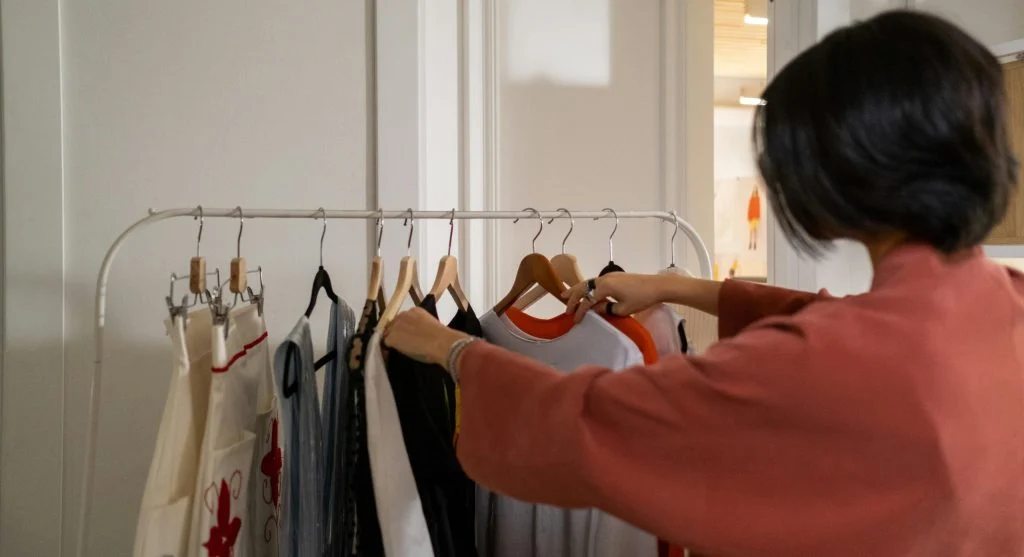
Credit: Ron Lach / Pexels
Why repeat wear is one of the most useful wardrobe strengths
Some readers think repeating clothing often means the wardrobe lacks variety. Stylists usually see it differently. Repeat wear often shows that the closet has dependable pieces that already fit real life. A jacket worn three different ways in one week may be doing more useful work than a standout item worn only once a season.
Wardrobe consultants often describe repeat wear as one of the clearest signs that a closet is functioning well. The goal is not to avoid repetition. The goal is to make repetition look natural, flexible, and easy across different days.
How outfit planning becomes easier with stronger basics
Outfit planning usually improves when wardrobe basics are doing most of the work. Shirts, knitwear, simple denim, straight trousers, useful dresses, and practical layers often support the widest range of combinations. Without these basics, even attractive trend pieces can be harder to use.
Fashion editors often explain that basics create the structure of the closet. They help readers move from one outfit to the next without too much guesswork. This is why good wardrobe tips usually strengthen basics before focusing on anything more dramatic.
Why color connection makes fewer pieces more effective
Color plays a major role in whether a wardrobe feels easy or frustrating. A calm, connected palette helps fewer pieces work harder because more combinations become possible. Shades such as black, navy, gray, white, beige, olive, and denim blue often make outfit planning smoother from one day to the next.
This does not mean a wardrobe must avoid color. It means the main foundation should already work well before stronger accents are added. When color supports the closet instead of interrupting it, fewer pieces often go much further.
How shoes affect whether a closet works hard or not
Shoes often decide how practical a wardrobe feels across the week. A few dependable pairs that support several outfits usually create more value than many pairs that only suit one narrow look. Loafers, simple sneakers, low boots, and flats often work harder because they move easily between clothing types.
Footwear specialists often note that useful shoes must fit the pace of daily life as well as the wardrobe itself. When shoes repeat easily, outfit planning becomes much more stable and the whole closet tends to feel more dependable.

Credit: Anastasia Shuraeva / Pexels
Why fit often matters more than quantity
A closet can hold many pieces and still feel disappointing if the fit is unclear. A shirt that sits badly on the shoulders, trousers with an awkward hem, or a jacket that never feels quite right may remain unused, even if the style looks appealing on the hanger. Good fit helps fewer pieces earn more real use.
Tailoring professionals often explain that small alterations can change how much value a piece provides. When a garment fits well, it becomes easier to repeat, easier to style, and easier to trust during quick morning decisions.
How to tell whether a piece is really working hard in the closet
A strong piece usually fits into several outfits, feels comfortable enough to wear for long hours, and returns often without much effort. One simple test is asking whether the item works in at least three real looks. If it does, it is likely helping the wardrobe. If it only works in one narrow combination, it may be taking up more space than value.
Closet organizers often suggest watching which pieces return from the laundry most often and which ones are easiest to reach for under pressure. Those patterns usually reveal what is truly working in the closet far better than shopping excitement does.
Why editing the closet can make remaining pieces stronger
Some items weaken a wardrobe not because they are bad, but because they interrupt the flow of outfit planning. They may be hard to match, uncomfortable to wear, or too specific for real life. When these items dominate the closet, useful pieces become harder to see and harder to use. Editing often helps the remaining pieces perform better.
Wardrobe experts often recommend separating high-use clothing from occasional items. This does not always mean removing things permanently. It often means giving the most useful pieces more room to function the way they need to during everyday life.
What a hard-working wardrobe usually feels like
A wardrobe that works hard usually feels calm rather than crowded. Getting dressed takes less time. More pieces combine without much effort. Shoes and layers support several days instead of only one look. The reader often feels less pressure to shop because the closet already offers clear options.
For many people, that is what good wardrobe tips are really trying to create. The goal is not a tiny closet for its own sake. The goal is a practical closet where fewer pieces work harder and daily dressing becomes less stressful as a result.
Frequently Asked Questions
Q: Why do wardrobe tips often suggest fewer pieces?
A: Wardrobe tips often suggest fewer pieces because a smaller group of useful clothes is easier to mix, repeat, and trust. Stronger connection usually matters more than sheer quantity.
Q: What makes a piece work harder in a wardrobe?
A: A piece works harder when it fits well, suits real life, and supports several outfit combinations. Repeat wear is often the clearest sign that a garment is valuable.
Q: Can fewer clothes really create more outfits?
A: Yes. Fewer clothes can create more outfits when the pieces connect clearly in color, shape, and function. A small well-planned wardrobe often feels more flexible than a crowded one.
Q: How can I tell if my closet is practical?
A: A practical closet usually makes dressing easier across several days. Useful pieces stay visible, outfits come together faster, and the same items repeat naturally without much stress.
Key Takeaway
Good wardrobe tips often focus on making fewer pieces work harder because practical closets depend more on coordination, repeat wear, and clear outfit planning than on sheer volume. When clothes fit well, mix easily, and support real life, daily dressing usually feels calmer and more dependable. For many readers, a strong wardrobe is not the one with the most clothing. It is the one where the right pieces continue proving useful again and again.

Related Posts

Why One Small Second-Choice Outfit Set Can Make Busy Mornings Feel Less Risky and More Manageable

Why One Small Always-Works Outfit Slot Can Make Daily Dressing Feel Faster and More Reliable