Why Mixing Too Many Outfit Intentions at Once Can Make Everyday Style Feel Unclear
An outfit usually looks strongest when it has one clear purpose. It might feel polished, relaxed, structured, soft, practical, or effortlessly casual. When several of those intentions compete within the same look, the overall result can become confusing. Rather than supporting one clear idea, the clothing sends mixed signals, making even good pieces feel less cohesive.
What Outfit Intention Really Means
Outfit intention is the overall mood or direction that an outfit creates. Some looks are designed to feel refined and polished, while others aim for relaxed comfort or understated practicality. Some outfits emphasize sharp tailoring, while others focus on softness and ease. Most people do not consciously think about outfit intention while getting dressed, but the eye naturally notices it. Clothing tends to feel more successful when every piece contributes to the same overall message.
When the top suggests one mood, the shoes another, and the accessories something completely different, the outfit can lose its sense of balance even if every item looks attractive on its own.
Why This Happens So Easily
Many people want their outfits to accomplish several goals at once. They want comfort, style, practicality, personality, and a modern appearance all in one look. While those goals are reasonable, trying to express all of them equally can create visual conflict.
For example, someone might add a structured blazer for polish, sporty sneakers for comfort, a relaxed tote bag for ease, and bold jewelry for personality. Individually, each piece works well, but together they may compete instead of supporting one another.
Fashion stylists often note that the strongest outfits are rarely the ones filled with the most ideas. Instead, they succeed because one clear direction leads the look while everything else quietly supports it.
Simple Outfits Depend Even More on Clear Direction
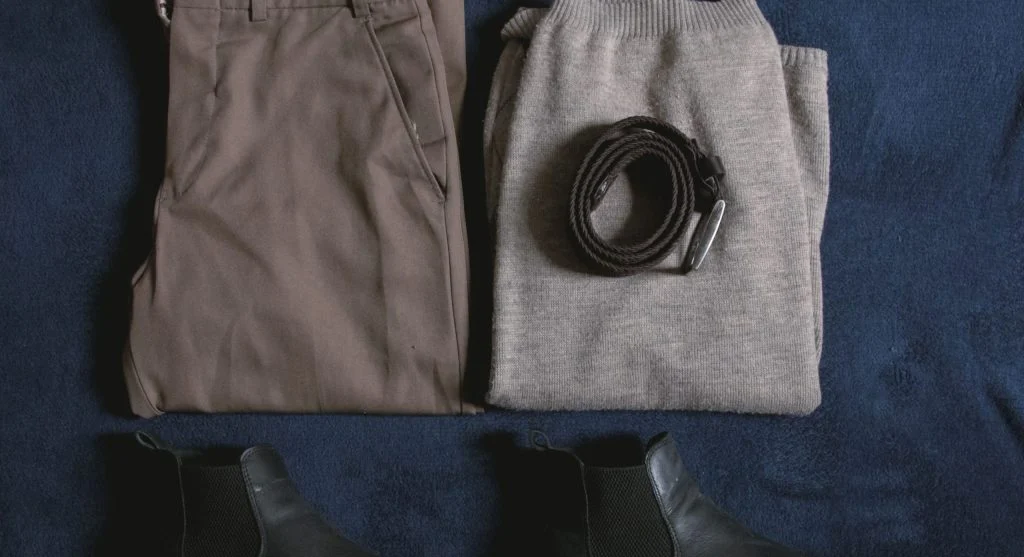
Minimal everyday outfits often rely on proportion, balance, and consistency rather than dramatic details. A simple combination of trousers, a shirt, and everyday shoes usually benefits from one obvious style direction.
Once several competing intentions are introduced, the outfit can begin to feel unsettled despite its simplicity.
This is why capsule wardrobes and everyday basics often look their best when every piece supports the same overall mood instead of trying to create several different ones at once.
Shoes Often Set the Tone
Footwear has a powerful influence on how an outfit is perceived. A sporty sneaker immediately creates a different feeling than a polished loafer or a sleek ankle boot.
If the rest of the outfit leans toward a clean, refined appearance, highly athletic shoes may pull the look in another direction. Likewise, formal footwear can make an otherwise relaxed outfit feel overly structured.
This does not mean shoes must perfectly match every garment. They simply need to reinforce the overall intention instead of introducing a completely different one.
Outer Layers Can Change the Entire Mood
Jackets, blazers, cardigans, and overshirts often establish the overall character of an outfit within seconds. A structured blazer communicates something very different from a relaxed cardigan or a utility jacket.
If the outer layer feels disconnected from everything underneath, the outfit may appear uncertain rather than intentional.
The most successful layering pieces usually continue the tone already established by the clothing instead of replacing it with an entirely new one.
Accessories Can Add Mixed Signals Too
Although accessories are smaller than clothing, they often carry a surprisingly strong visual message. A highly polished handbag, oversized statement jewelry, or an extremely casual tote can quickly shift the mood of an outfit.
When clothing already expresses one clear intention, accessories generally work best when they reinforce that direction instead of competing with it.
Sometimes an outfit feels noticeably stronger after removing one accessory—not because it lacked interest before, but because there were simply too many different ideas competing for attention.
How to Recognize When an Outfit Has Too Many Intentions
One common sign is that the outfit feels almost right but never fully comes together. Another clue is when one item seems as though it belongs to a completely different occasion.
You may also notice that every piece looks attractive individually, but the outfit feels unusually busy or emotionally confusing once everything is worn together.
In many cases, the solution is not adding another item. Instead, it involves reducing one competing style direction so the primary intention becomes easier to recognize.
Clear Direction Often Looks More Refined
Outfits with one strong visual purpose frequently appear more polished because they feel focused and confident. The eye understands them immediately, and nothing seems to have been added simply to solve another styling problem.
Many people describe these looks as looking more expensive or “put together.” Often, what they are really noticing is not the price of the clothing but the clarity of the overall styling.
You Usually Only Need One Small Adjustment
Fortunately, fixing this problem rarely requires changing the entire outfit. Start by deciding what the main intention should be. Then identify the piece that seems to move furthest away from that goal.
It may be the shoes, the outer layer, the handbag, or a bold accessory. Replacing just one conflicting item often allows the entire outfit to feel more balanced almost immediately.
Rather than wondering why the outfit feels off, this approach turns the problem into one simple styling question: Which piece is telling a different story?
Clear Outfits Become Easier to Repeat
When an outfit has one obvious direction, it is usually easier to recreate later. You understand why it worked, making it simpler to build similar looks using different versions of the same types of pieces.
Over time, this creates a wardrobe with stronger consistency because the clothing begins working together instead of competing for attention.
For many people, one of the most valuable style lessons is realizing that a wardrobe becomes easier to use when individual pieces support each other rather than trying to express every possible mood at once.
Frequently Asked Questions
Q: What does mixing too many outfit intentions mean?
A: It means the outfit is trying to create several different style directions at once, such as polished, sporty, formal, relaxed, and trendy, without enough agreement between the pieces.
Q: Why does that make everyday style feel unclear?
A: It makes style feel unclear because the eye receives too many competing messages, so the outfit loses a strong shared direction even if the individual items look good alone.
Q: Which pieces most often create conflicting intentions?
A: Shoes, outer layers, bags, and bold accessories often create the strongest conflict because they influence the outfit mood very quickly and can shift it away from the main idea.
Q: What is the easiest way to fix this problem?
A: Choose the main outfit mood first, then replace the one item that seems to be pushing the look too far in another direction. Often one change is enough to restore clarity.
Key Takeaway
Mixing too many outfit intentions can make everyday style feel unclear because different pieces compete to create different moods instead of working together toward one shared direction. When clothing, shoes, layers, and accessories all support the same overall intention, outfits usually feel calmer, more polished, and easier to wear. For many people, stronger everyday style begins with choosing one clear idea and allowing every piece to reinforce it.